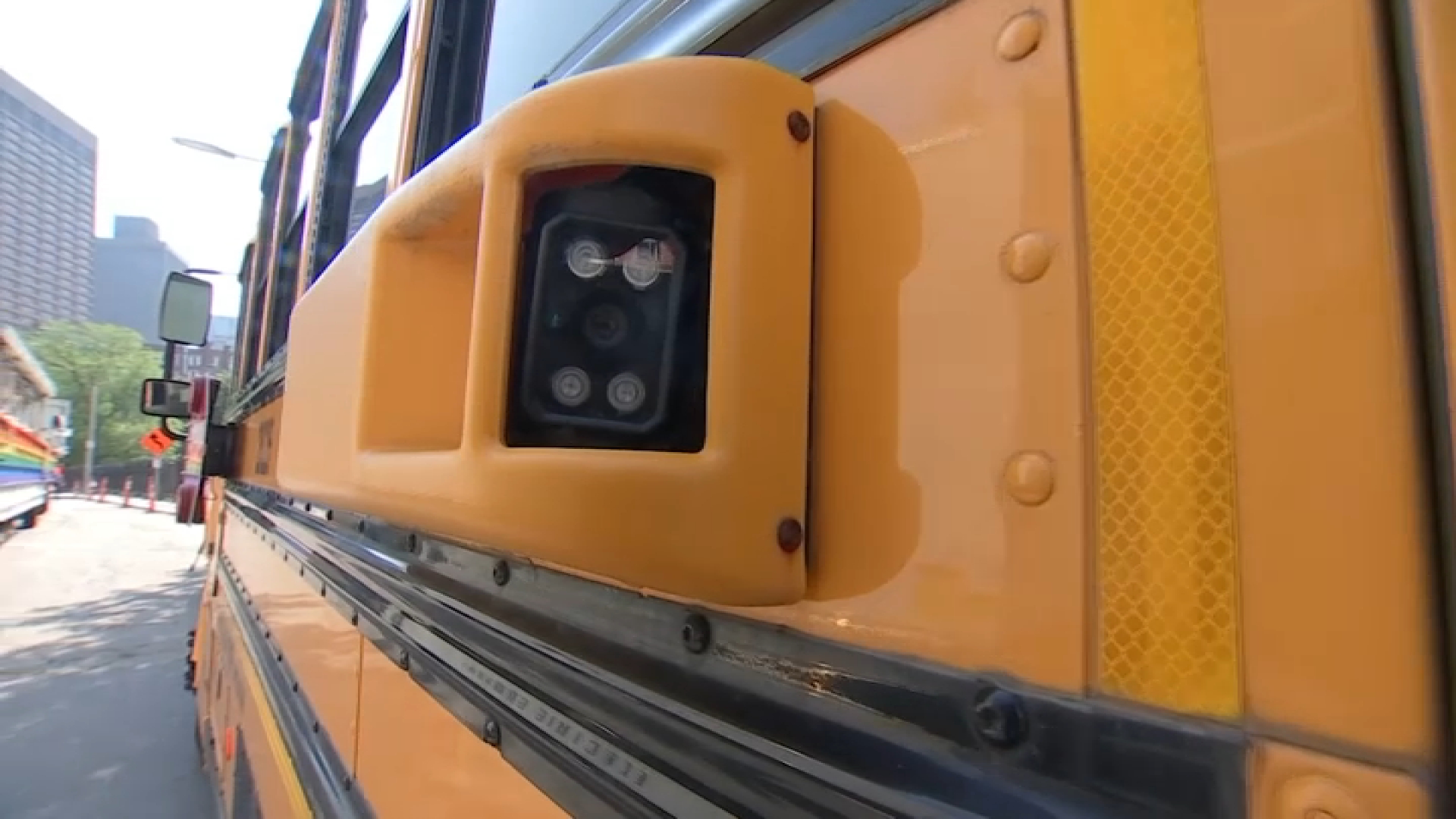
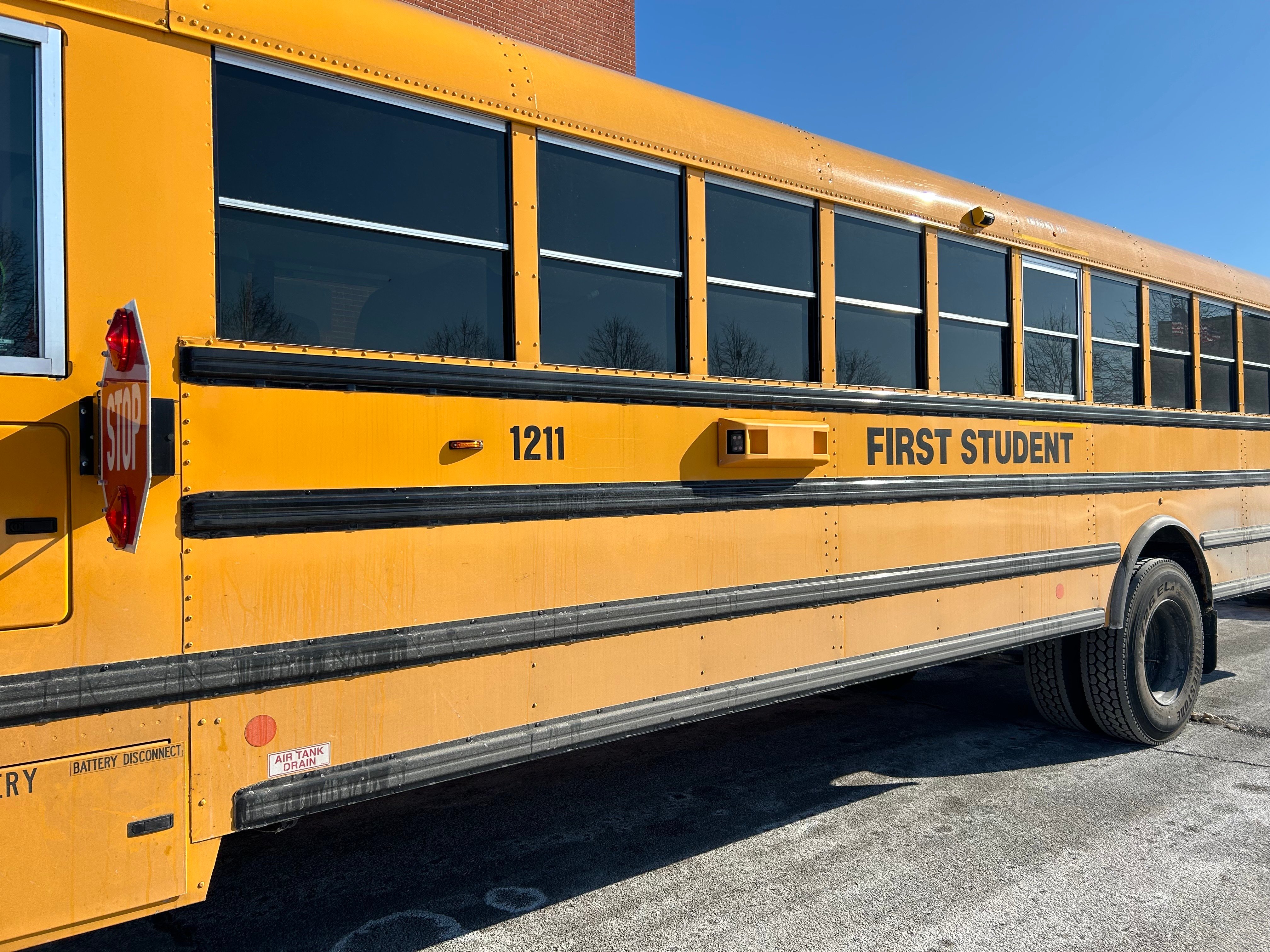
Boston leaders are considering a plan to equip school buses with AI-enabled cameras to identify drivers who pass stop-arms.
Boston could soon use artificial intelligence to help catch drivers who illegally pass stopped school buses.
Boston Public Schools is seeking a company to provide AI-enabled cameras that would identify vehicles that pass a school bus while its stop-arm is extended.
Stream NBC10 Boston news for free, 24/7, wherever you are.
 WATCH HERE
The push began in part with concerns from parents in Roslindale, according to Boston City Councilor Enrique Pepén, who said families told him they were regularly seeing drivers ignore stopped school buses. He visited a busy intersection to see the problem firsthand.
"I kid you not, the first day that I was waiting with them for their kids, a driver went right by the stop sign," Pepén said.
Pepén said the technology could help fill a gap in enforcement.
"It's impossible to have a police officer at every single corner, at every single bus stop, or every school at all times," he said.
The move comes after Gov. Maura Healey signed a state law last year allowing cities and towns to use school bus camera systems to enforce stop-arm violations.
Pepén said the cameras being considered in Boston would only be activated when a school bus stop-arm is extended and a vehicle passes the bus.
"The camera enforcement is actually triggered only when the stop sign arm comes out of a school bus," he said. "And the system in place is only meant to capture the license plate of the vehicle that runs the stop sign."
Artificial intelligence would not have the final say on whether a driver receives a violation. Pepén said any potential violation would still be reviewed by the Boston Police Department.
"The police department has to review the video to make sure that they actually violated the sign, and then they get the violation sent to them," he said.
The technology also raises privacy questions about how camera footage and license plate data would be collected, stored and used.
State law limits how footage from school bus camera systems can be used and retained. For example, according to the law, any video, photographs or other information that does not show a violation must be destroyed within 30 days of being recorded.
Pepén said data privacy will also be part of Boston's review as the city considers potential vendors.
"We just want to make sure that people feel that their privacy isn't being violated," he said.
The request for proposals closes later this month.
Pepén said he hopes Boston can begin with a pilot program in the spring before eventually expanding the technology to the entire fleet for next school year. He also said the initial rollout could focus on warnings and public education before fines are issued.
Boston Public Schools has not yet responded to our request for additional information.